RAAHO / TRUCKER APP
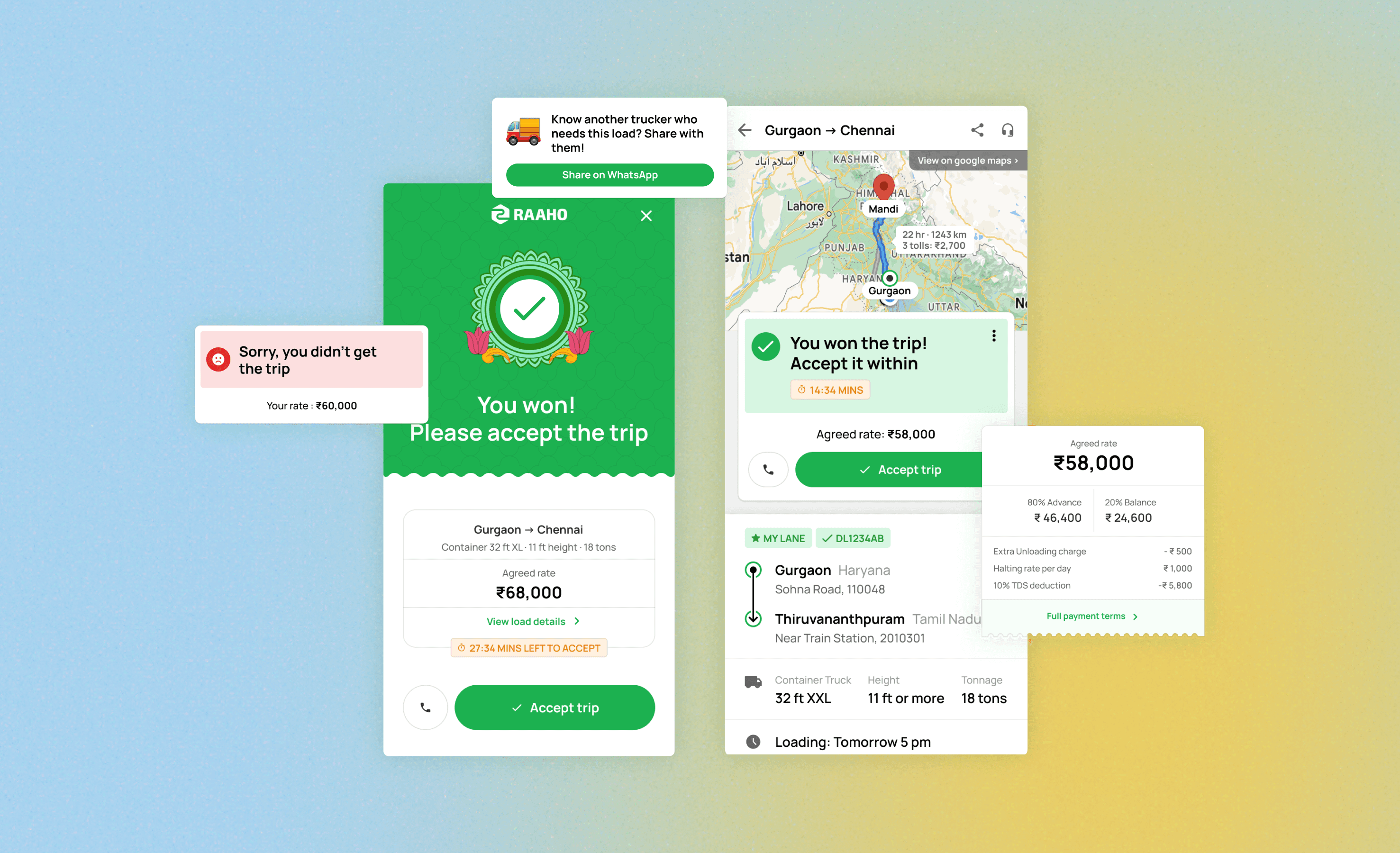
OVERVIEW
Raaho- a freight booking platform connecting shippers to truckers across India, aiming to create endless capacity of demand and zero waste by digitising the freight network in India for full-truck loads.
My challenge: translate India’s fragmented & relationship-driven freight ecosystem into a seamless digital experience that both shippers and truckers could trust and adopt.
MY ROLE
I worked as the product designer, collaborating with Juhi Chitra and the co-founder/Head of Product. My work spanned end-to-end –– from on-ground field research and experience definition to crafting the final visual design and validating it through iterative testing with shippers and truckers.
TEAM
Head of product, 2 Associate product managers, Lead product designer, Engineers
Freight without a framework
India moves millions of tonnes of goods every day, yet the backbone of this movement remains disconnected and largely undocumented. The freight movement still runs on calls and relationships and information lives in conversations, not systems.
PHONE CALLS
WHATSAPP MESSAGES
HANDWRITTEN NOTES
VERBAL AGREEMENTS
This lack of structured systems causes…
Where Raaho steps in..
Raaho primarily worked with full-load-trucks, focussing on large shipments that fill a whole truck - aiming to digitise a deeply offline industry and reduce empty miles on the road while also increasing trucker earnings.
..and what they came to us with
Low adoption from truckers
Inconsistent trip conversions
Lesser interaction on load bids
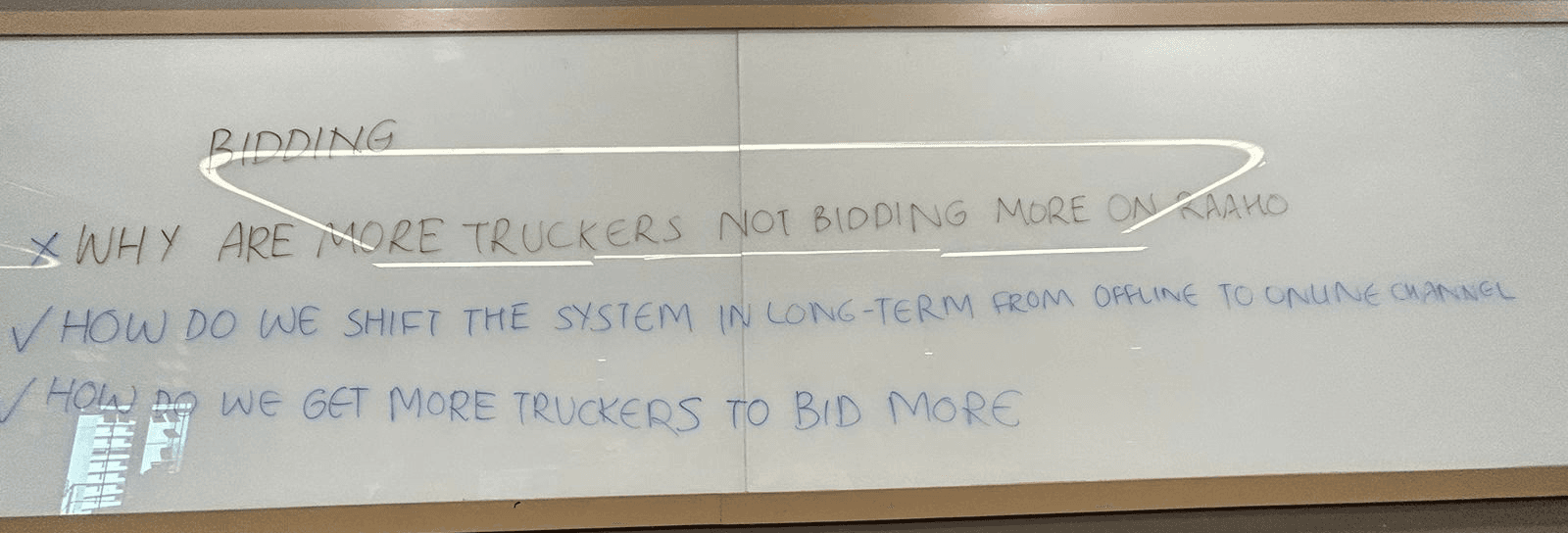
THE PROBLEM
In a fragmented freight ecosystem, truckers waste hours verifying basic load details - turning uncertainty into delays, lost income, and reduced trust in the system.
From workshops to research
Before designing anything, we needed clarity on how freight actually flowed through Raaho.
Collaborated with product, ops, and ground teams
Mapped the end-to-end workflow
Highlighted friction points and decision moments
Created a business map to understand business goals
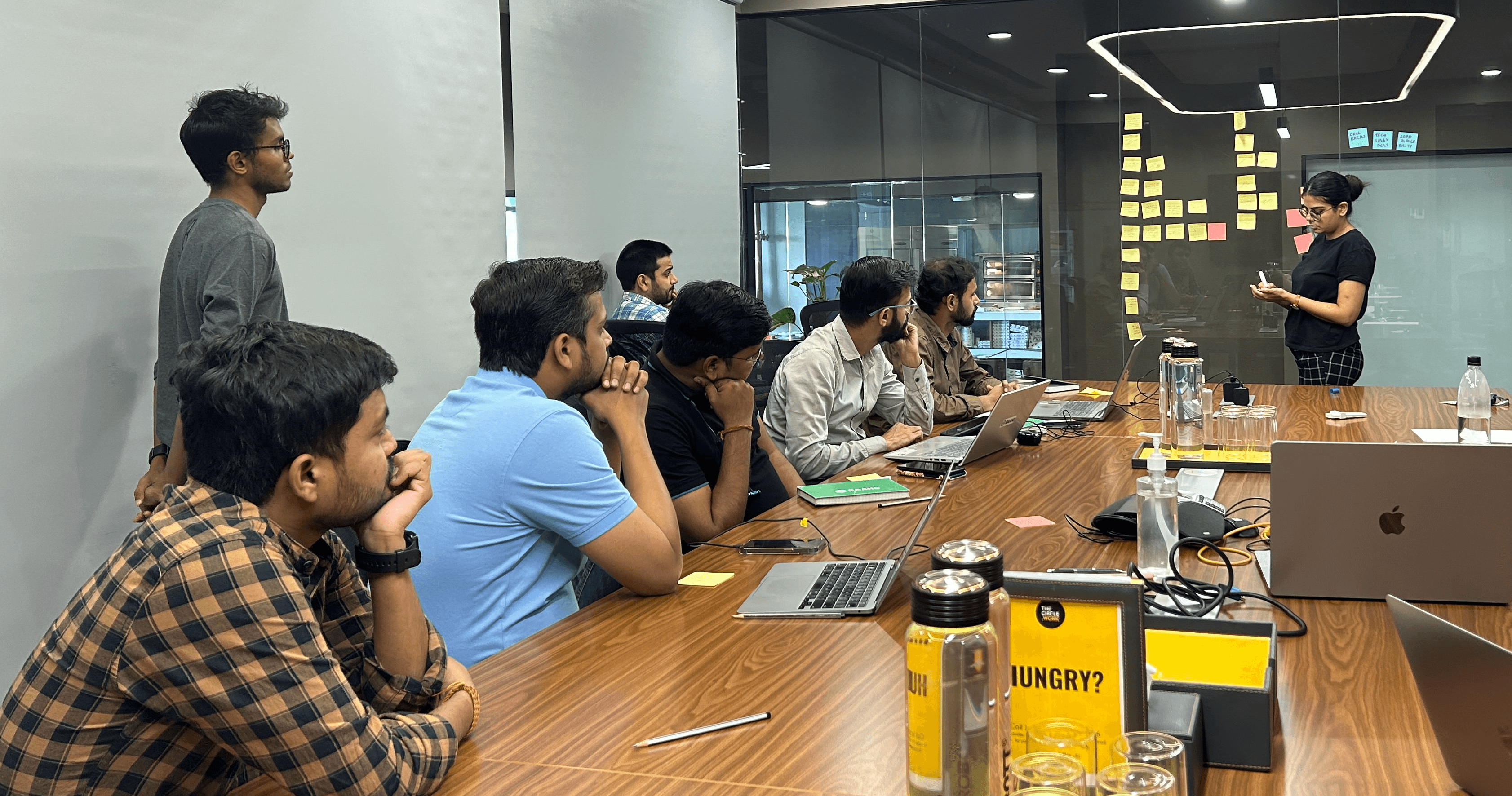
Understanding the system..
To design for scale, we needed to understand how the freight workflow actually moved through Raaho. We worked with product to create a business map in order to understand the system and then mapped the existing workflow.
…And our users
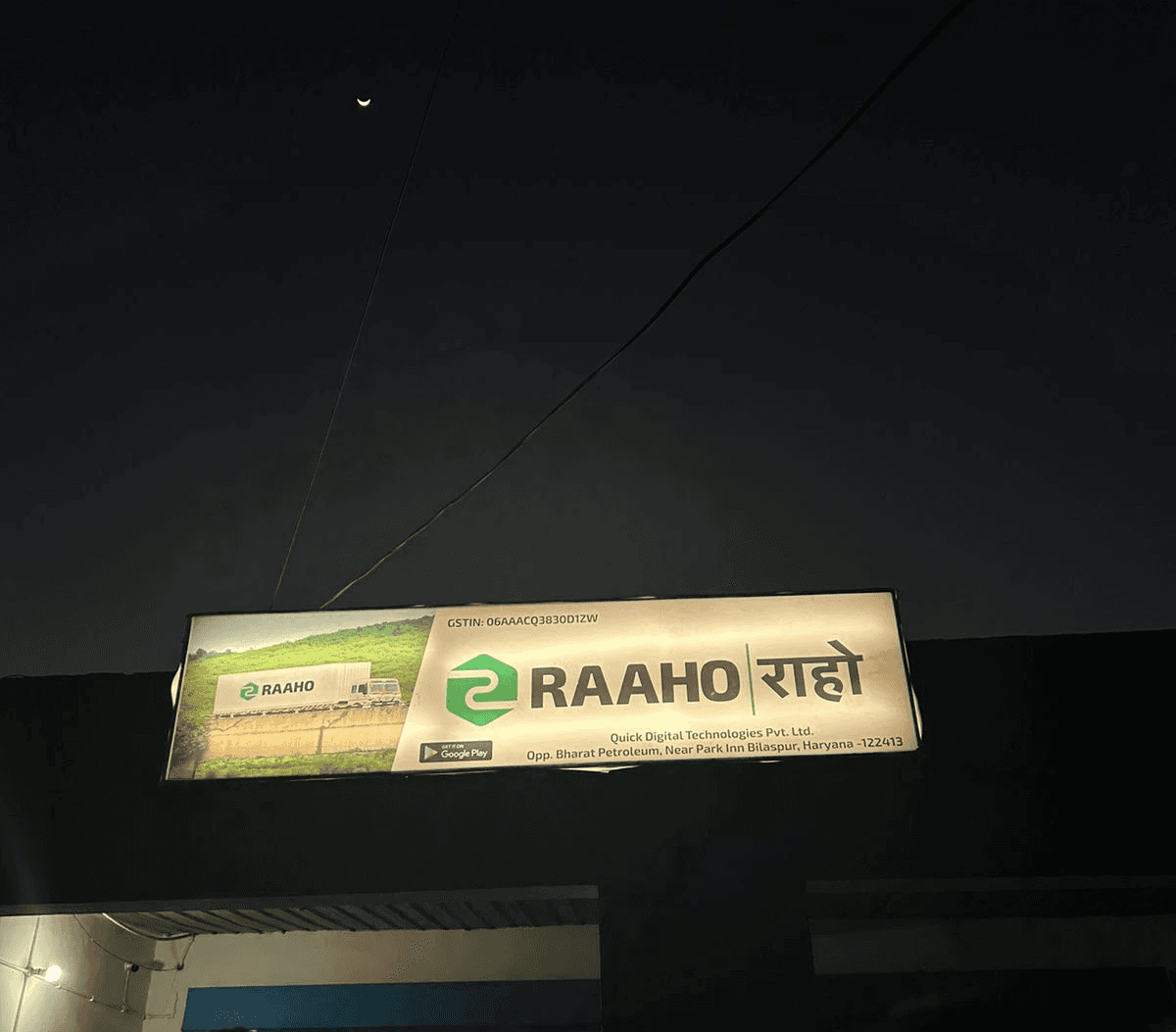
To understand the user's side of these gaps, we went to where the work was happening. We started by interviewing users at the Raaho office in Bilaspur, Haryana and ran cold calls for feedback.
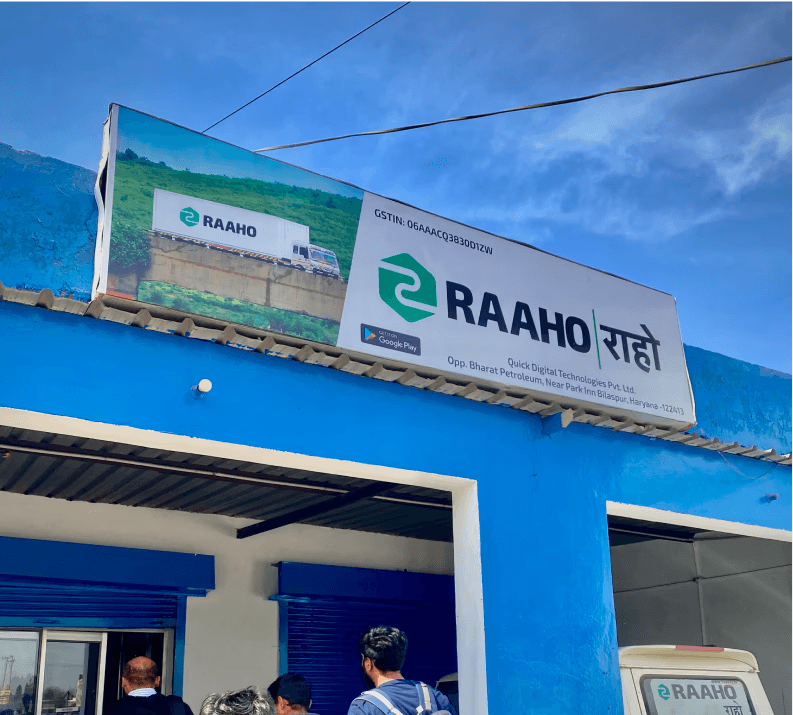
10+ cold calls conducted with users
25+ truckers interviewed over the span of 8 months
Then the real picture began to emerge..
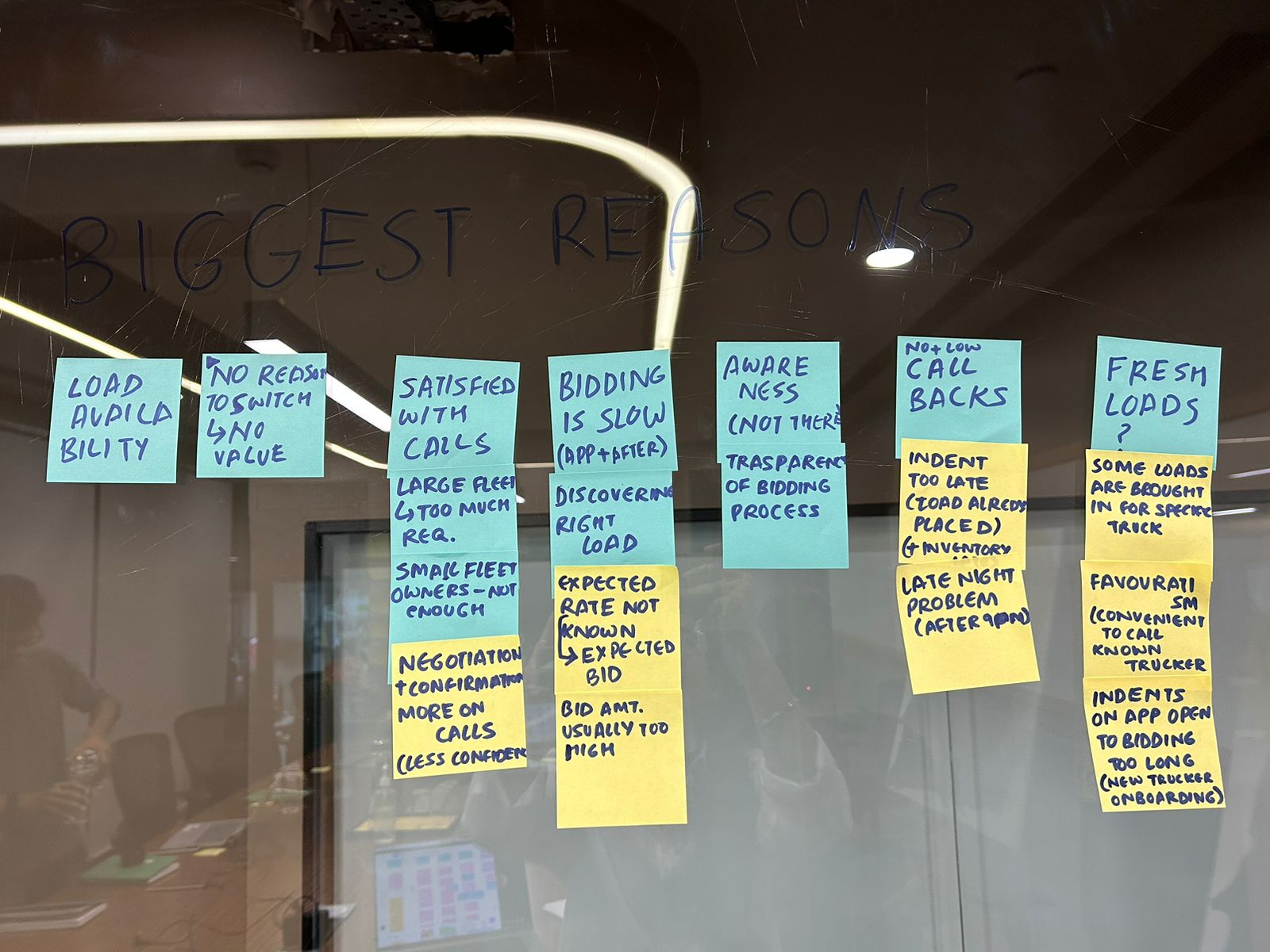
Our conversations revealed multiple behavioural, operational, and information gaps.
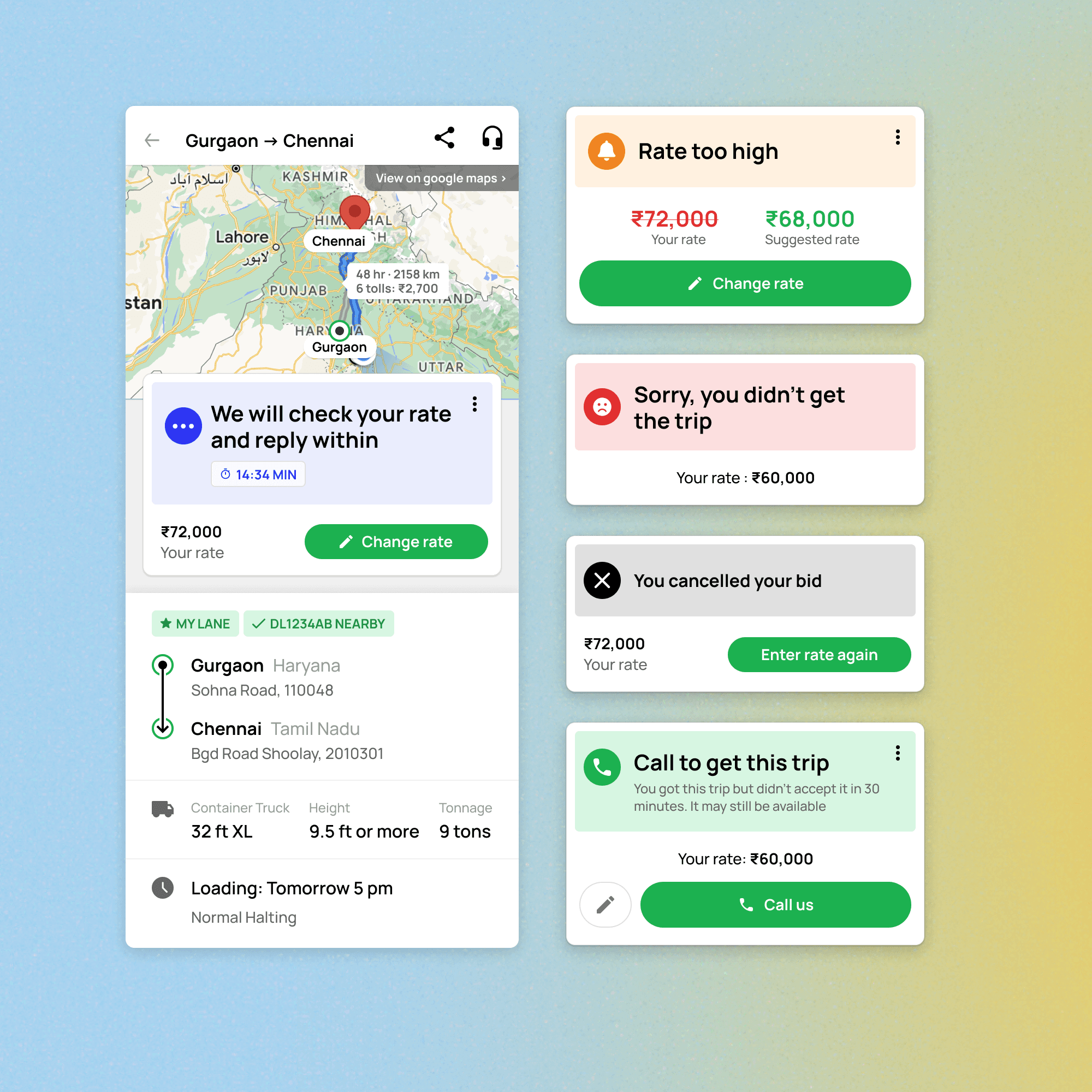
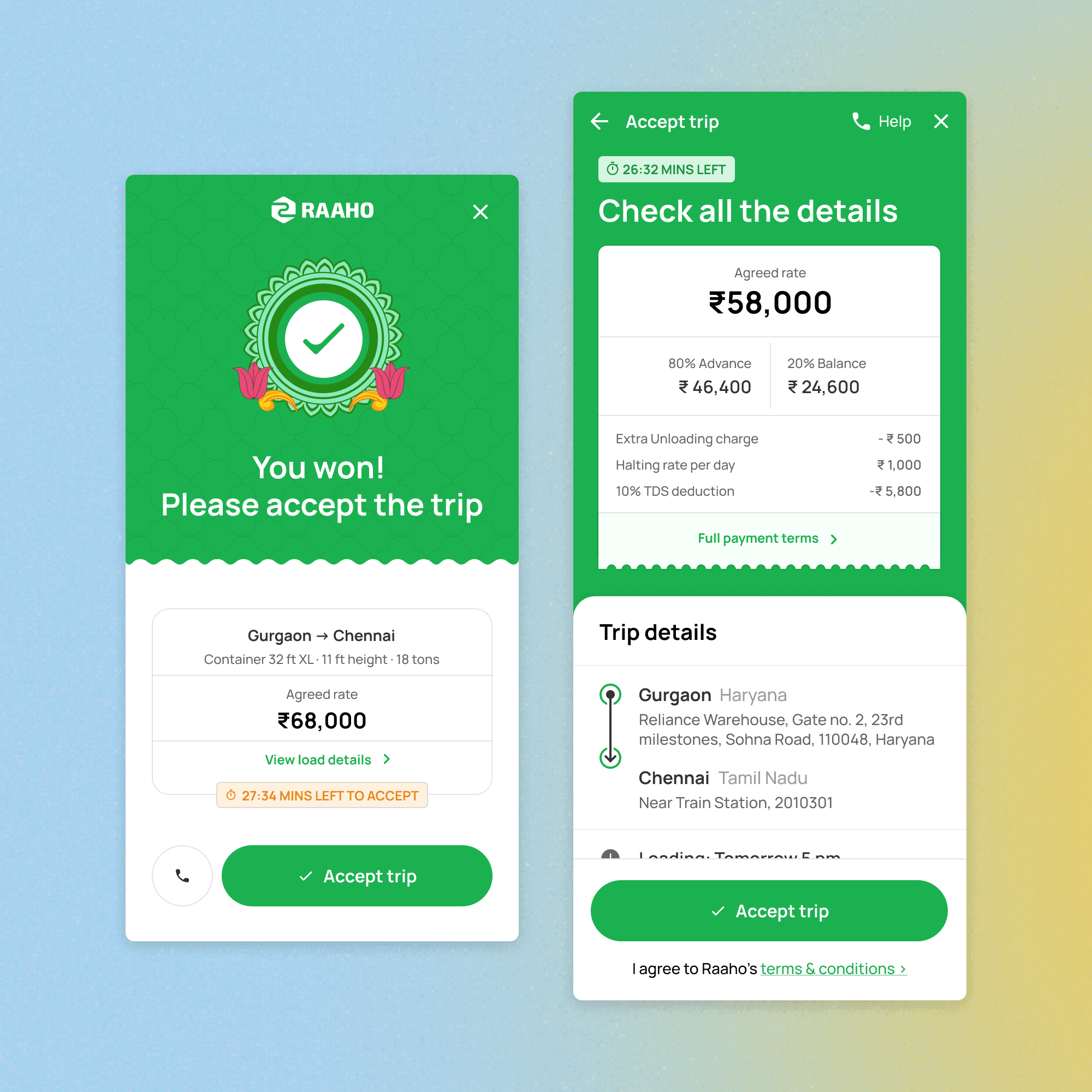
Instant validation required
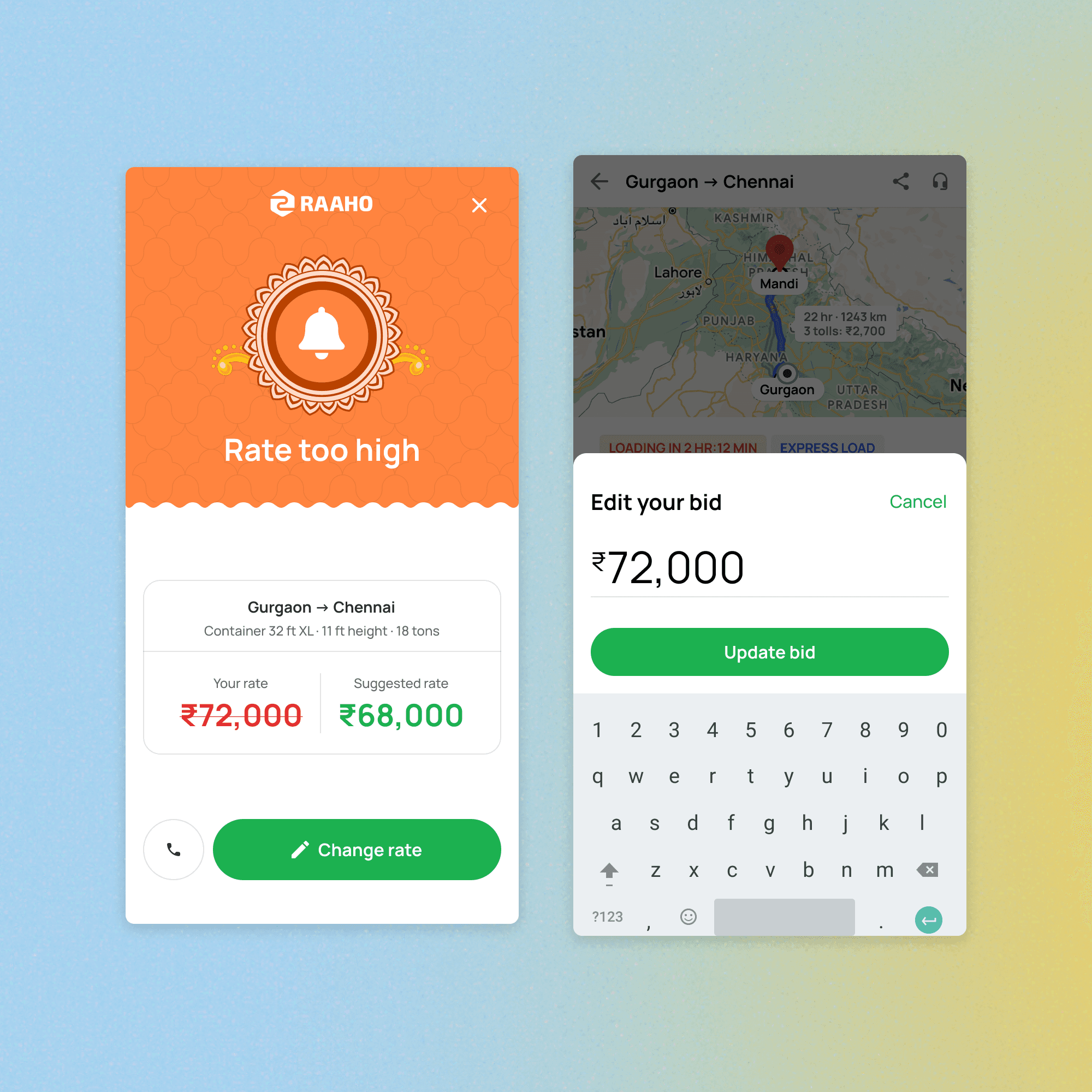
Truckers felt that calling Raaho staff after bidding would increase their chances of getting the load.
Reframing the challenge
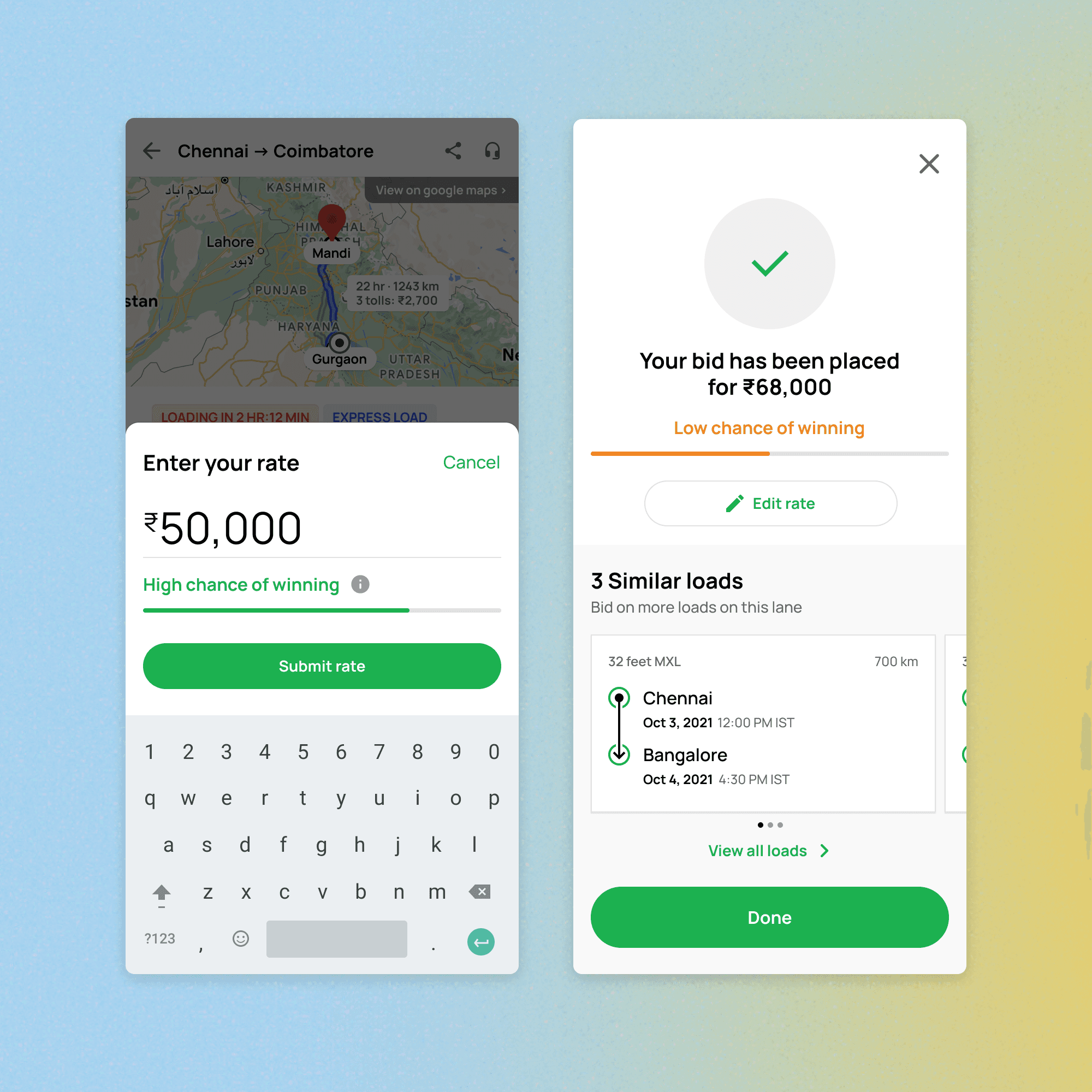
How might we make the app feel as trustworthy and responsive as a phone call?
Shift in behaviours and metrics
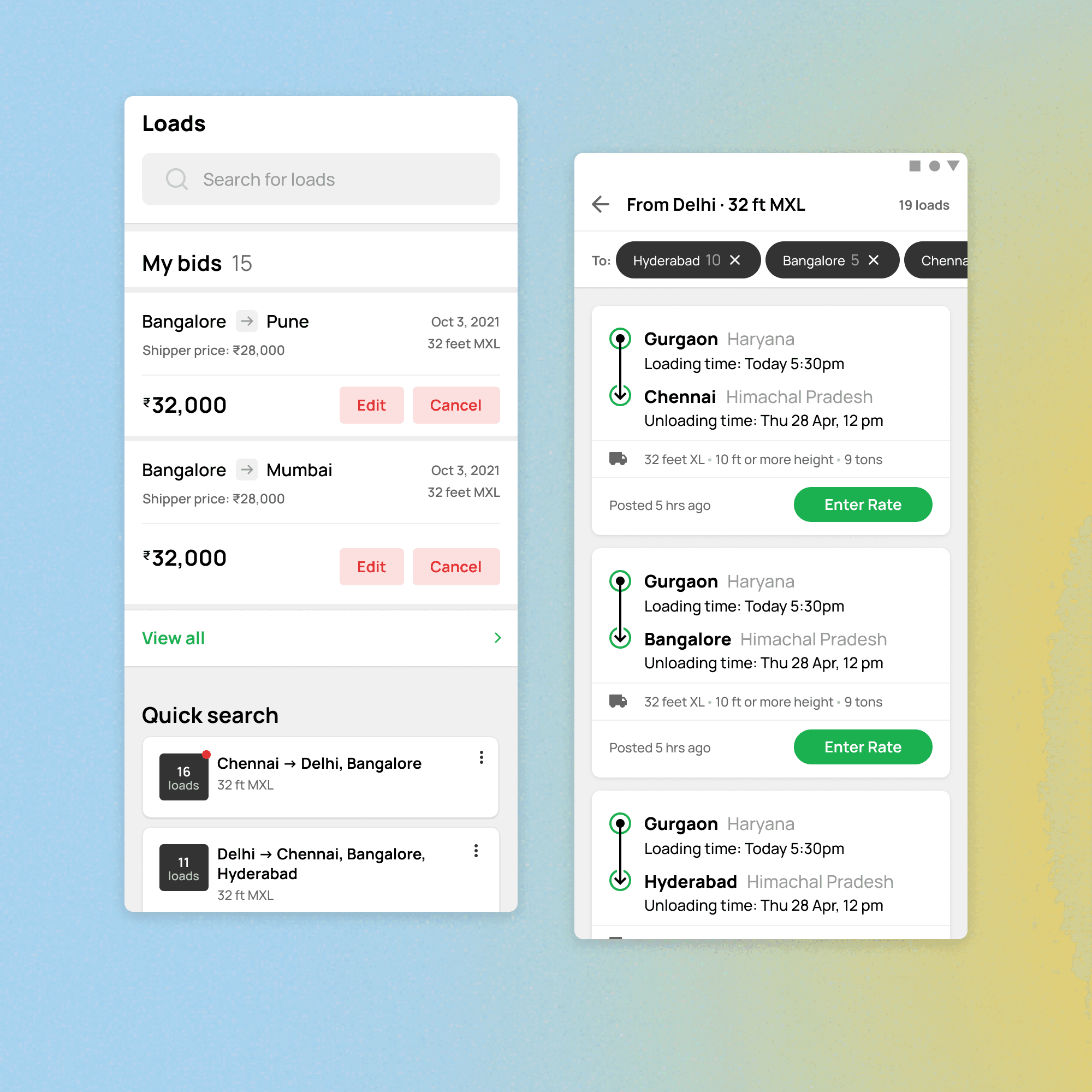
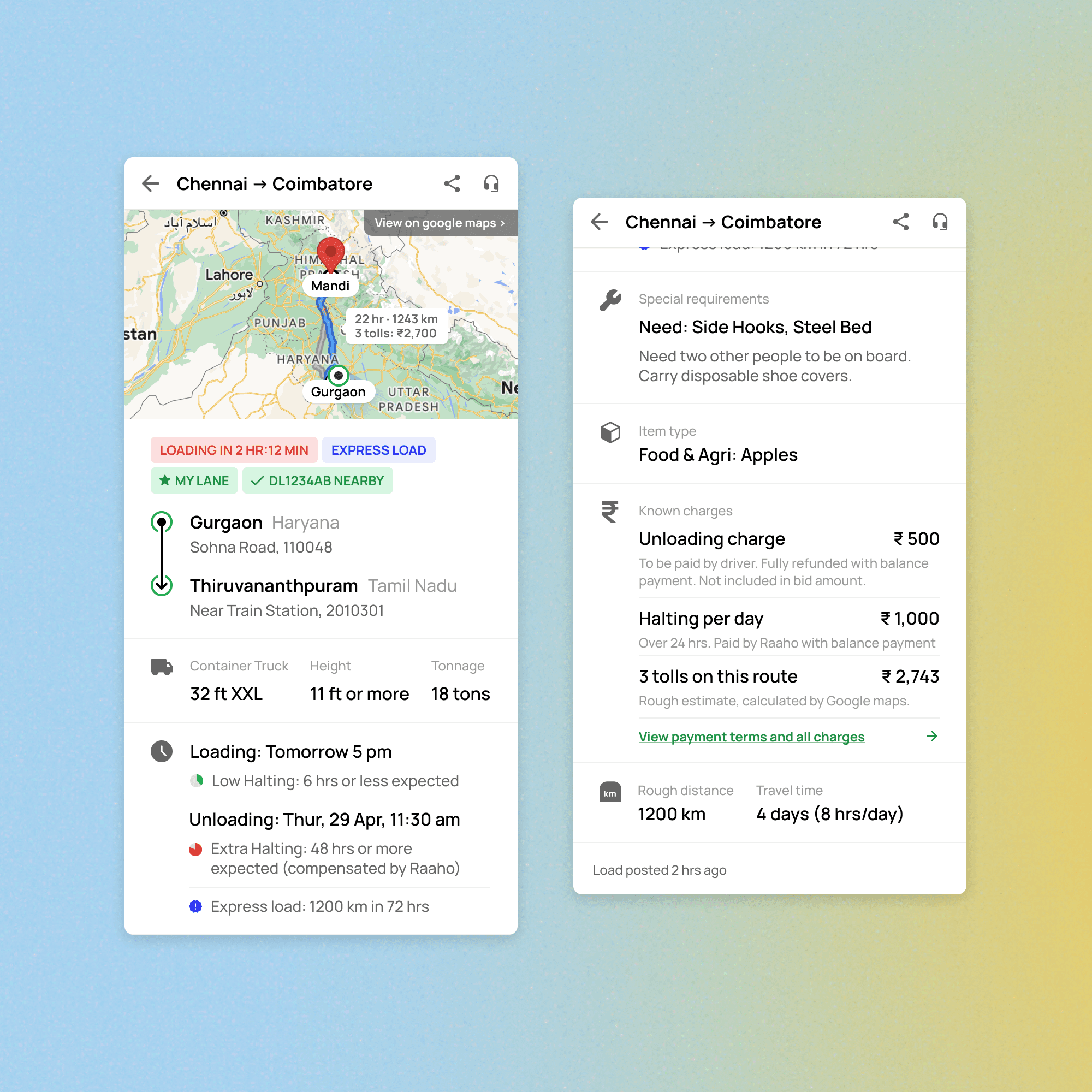
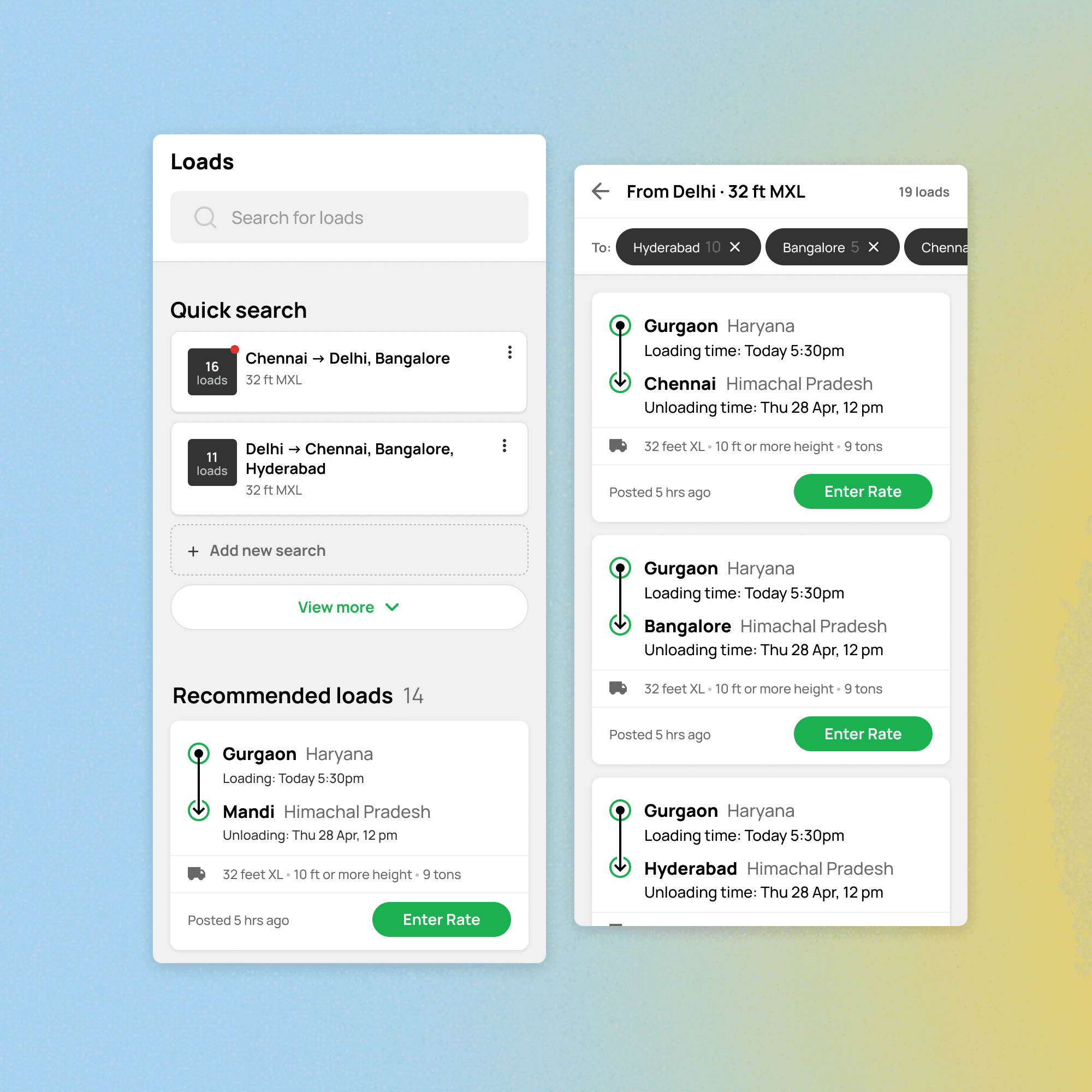
Drove a 2x increase in load discoverability through home page redesign and load description improvements.
Led to a 5% increase in growth through personalised recommendations and bid probability.
And the lessons that I carry…
Designing for trust is different from designing for tasks. Truckers didn’t need more features - they needed clarity, predictability, and confirmation at every step.
Test. Learn. Adjust. User testing isn’t just about validating solutions - it’s about ensuring we’ve understood the problem correctly.
Field insights beat assumptions. On-site interviews revealed realities we couldn’t have uncovered through assumptions or internal discussions.
Designing for Bharat means designing for habits, not just journeys. It's a form of art learning to communicate through fewer words and retaining learned behaviours when making improvements to applications.